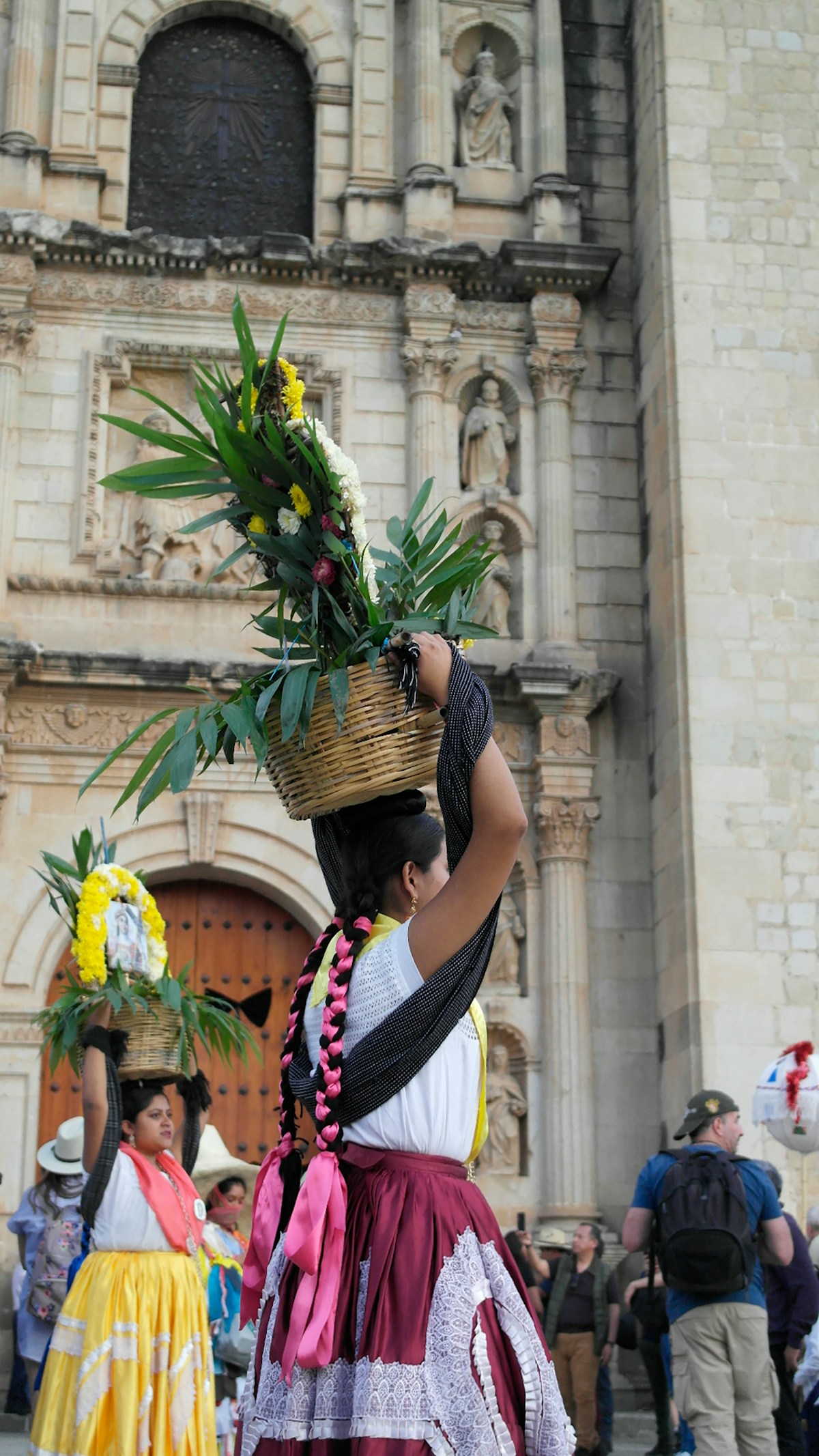
Every July, Oaxaca City transforms. Streets fill with delegations from across the state, markets overflow with marigolds and handwoven textiles, and on two Monday mornings, the hillside amphitheatre on Cerro del Fortín erupts into the most extraordinary display of indigenous culture in all of Mexico. This is the Guelaguetza - and if you only ever attend one Mexican festival, make it this one.
Top Tours at a Glance
Here’s a quick comparison of top-rated Guelaguetza and Oaxaca cultural tours on GetYourGuide:
| Tour | Duration | Price (from) | Group Size | Highlights |
|---|---|---|---|---|
| Guelaguetza Festival Tour with Reserved Seats | Full day (8 hrs) | from $85/person | Group | Palco A/B tickets included, pre-show market visit |
| Oaxaca City Cultural Walking Tour | Half day (3 hrs) | from $35/person | Small group | Santo Domingo, Zócalo, Mercado Benito Juárez, mole samples |
| Oaxaca Cooking Class + Market Tour | Half day (4 hrs) | from $70/person | Small group (max 8) | Local market, hands-on mole negro, traditional recipes |
| Mezcal Tasting Tour: Oaxaca Distilleries | Half day (4 hrs) | from $55/person | Small group | 3 palenques near Oaxaca City, production explanation |
| Night of the Dead Oaxaca Tour (Nov 1–2) | Evening (4 hrs) | from $65/person | Group | San Pablo Villa cemetery, candlelit vigils, food offerings |
Browse all Oaxaca cultural tours → GetYourGuide
What Is the Guelaguetza?
The word guelaguetza (pronounced gweh-lah-GET-sah) comes from Zapotec, the ancient language of Oaxaca’s indigenous peoples. It means mutual exchange or cooperative giving - the act of offering something to others with the expectation that the gesture will be returned in kind. The festival embodies this philosophy literally: performers throw gifts into the crowd.
The celebration has pre-Hispanic roots stretching back centuries, originally a harvest offering to Centéotl, the goddess of corn. After Spanish colonisation, it merged with Catholic feast days but never lost its indigenous identity. Today it is Oaxaca’s largest cultural event and one of the most significant indigenous festivals in Latin America. UNESCO has recognised the Guelaguetza as an element of Mexico’s intangible cultural heritage.
2026 Festival Dates
The Guelaguetza takes place on the last two Mondays of July. In 2026, those dates are:
- Monday 20 July 2026 - morning show 10:00am, evening show 5:00pm
- Monday 27 July 2026 - morning show 10:00am, evening show 5:00pm
Plan to be in Oaxaca for at least three nights around each date to absorb the surrounding street events, markets, and nighttime celebrations that build throughout the week.
The Venue: Auditorio Guelaguetza
The Auditorio Guelaguetza sits partway up Cerro del Fortín, a hill on the western edge of Oaxaca City. The open-air, tiered amphitheatre holds around 12,000 people and was purpose-built for the festival. From the upper free sections, you can see the entire valley floor, the colonial rooftops of the Centro Histórico, and on clear mornings, the outline of Monte Albán on the ridge to the southwest.
The walk up takes about 20–30 minutes from the centre; taxis and colectivos run a shuttle service on festival mornings. Go up early - there is food, craft stalls, and mezcal vendors operating from around 7am.
Tickets and Sections
The Auditorio is divided into four sections. Sections A and B are reserved and ticketed; Sections C and D are free.
Paid sections (as of 2026):
- Section A (Palcos A - closest to the stage): approximately MXN 1,632 (~USD 88) at regular price; presale pricing lower
- Section B (Palcos B - mid-tier): approximately MXN 1,321 (~USD 71) at regular price
Paid tickets go on sale through Superboletos and in person at the Oaxaca State Tourism Office on Avenida Juárez. Presale ended in early June 2026 - check Superboletos for current availability.
Free sections:
- Sections C and D (upper tiers, unreserved): no ticket required, first come first served
- To get a seat, arrive by 5am at the latest. The queue starts forming before dawn. Bring water, food, and sun protection - you will be waiting in the open air for several hours before the show starts.
What You’ll See
Eight regional delegations from across Oaxaca’s cultural zones take turns on the stage - the Sierra Juárez, the Cañada, the Mixteca, the Papaloapan, the Sierra Sur, the Costa, the Istmo de Tehuantepec, and the Valles Centrales. Each delegation performs traditional dances in costume, accompanied by live regional music.
Highlights to watch for:
- Danza de la Pluma (Dance of the Feather) - the most iconic Oaxacan dance, performed by the Valles Centrales delegation in elaborate feathered headdresses. It re-enacts the Spanish conquest and the conversion of indigenous peoples, though interpretations of its meaning vary.
- Jarabe del Valle - a courtship dance with intricate footwork performed in traditional Tehuana or Oaxacan dress.
- Flor de Piña (Flower of the Pineapple) - performed by women from the Papaloapan region balancing pineapples on their shoulders. At the end, they throw the pineapples into the crowd - catch one and you’re said to receive good fortune for the year.
The pineapple throw is one of several moments where the Guelaguetza’s spirit of mutual exchange becomes physical. Performers also toss maize, bread, totopes (flat corn crackers), and other regional goods into the audience. Sit close to the stage for the best chance of catching something.
Surrounding Events
Bani Stui Gulal - a historical pageant held at the Auditorio in the days preceding the main festival. It dramatises Oaxacan history from pre-Hispanic times to the present, performed in Zapotec and Spanish.
Feria Internacional del Mezcal (FIMM) - runs July 17–28 in 2026, making it the ideal companion event to the Guelaguetza. Dozens of Oaxacan mezcal producers set up at the city centre fairground, offering tastings, workshops, and sales direct from the palenque (distillery). This is the best week of the year to explore Oaxaca’s mezcal culture. Our guide to Oaxaca mezcal tours covers the full range of options.
Convite Popular - the opening parade that kicks off the festival season, held July 1 in 2026. Delegations march through the city streets in costume - free to watch from the roadside.
Where to Stay
Book your accommodation the moment you decide to attend. Hotel prices in Oaxaca jump significantly during festival weekends and properties in the most-requested areas sell out two to three months in advance.
Centro Histórico - the most convenient location; walking distance to the Zócalo, the markets, and the Auditorio walk. Boutique hotels in colonial buildings here run from approximately MXN 1,800–4,500 per night (as of 2026). Expect significant premiums during festival week.
Jalatlaco - the quieter, photogenic neighbourhood just east of the centre. Cobblestone streets, flowering doorways, independent cafes, and several small guesthouses that feel genuinely local. Fills up fast for Guelaguetza - reserve early.
Colonia Reforma - slightly further from the historic core but better value. A ten-minute taxi to the Zócalo; more guesthouses and mid-range hotels with availability when the centre is full.
See our Oaxaca City guide for full neighbourhood breakdowns and accommodation recommendations.
Getting to Oaxaca
By air: Oaxaca International Airport (OAX) handles direct flights from Mexico City (Aeropuerto Internacional Benito Juárez, MEX) - the flight is roughly one hour. Volaris, Viva Aerobus, and Aeromexico all operate the route. Book at least six weeks ahead during festival season; fares spike in the two weeks before each show date.
By bus: ADO operates direct first-class service from TAPO (Terminal de Autobuses de Pasajeros de Oriente) in Mexico City to the Oaxaca bus terminal, approximately six to seven hours via the ADO GL service. Comfortable, reliable, and more affordable than flying - a reasonable choice if you have time and want to see the mountain scenery on the approach.
What to Eat During the Festival
Oaxaca’s food scene is at its most festive in July. Street stalls cluster around the Auditorio on show days and along the Mercado Benito Juárez throughout the week. Do not leave without trying:
- Mole negro - the complex, dark Oaxacan mole made with chocolate and chilli, most authentic when served with turkey over rice. Our Oaxacan mole guide covers all seven variants.
- Tlayudas - large, crisp tortillas topped with black bean paste, Oaxacan cheese (quesillo), meat, and salsa. Substantial enough for a full meal.
- Chapulines - toasted grasshoppers seasoned with lime and chilli; a pre-Hispanic staple sold by the bag at every market stall. Try them before judging.
- Tejate - a cold, frothy pre-Hispanic drink made from maize, cacao, and mamey seed, served in a gourd at market stalls.
- Mezcal - Oaxaca produces the majority of Mexico’s artisanal mezcal. Order it solo (neat) with a slice of orange and sal de gusano (worm salt) on the side, not as a cocktail mixer.
Photography Tips
- The morning shows (10:00am start) are better for photography - the sun lights the stage from behind the audience and the colours read well. The 5:00pm show has more dramatic sky light but the stage can be backlit depending on your position.
- From Section B, you get a decent mid-distance view of the full stage with costumes visible. Section A allows detail shots of individual performers.
- The free sections offer a wide-angle view of the amphitheatre and valley - excellent for establishing shots of the whole event.
- The Convite Popular parade on July 1 is one of the most photographable days of the entire season: close proximity to performers, no admission fee, and golden-hour street light if you position yourself on the western-facing streets.
- Arrive at the Auditorio before the show for shots of delegations warming up and the crowd filling in - the formal costumed processions to the stage are worth capturing.
Plan your trip: tours in Oaxaca.
Related City Guides
- Oaxaca City Travel Guide
- Mexico City Travel Guide
- Things to Do in Oaxaca City
- Best Restaurants in Oaxaca City
- Oaxaca Mezcal Tours - the Feria Internacional del Mezcal runs the same week as the Guelaguetza
- Oaxaca–Chiapas Itinerary - route that centres on Oaxaca City with a July festival stop
- Festivals and Events in Mexico - full calendar of major Mexican cultural events
- Mexico in July - the Guelaguetza falls in late July; plan your Oaxaca trip around the festival